

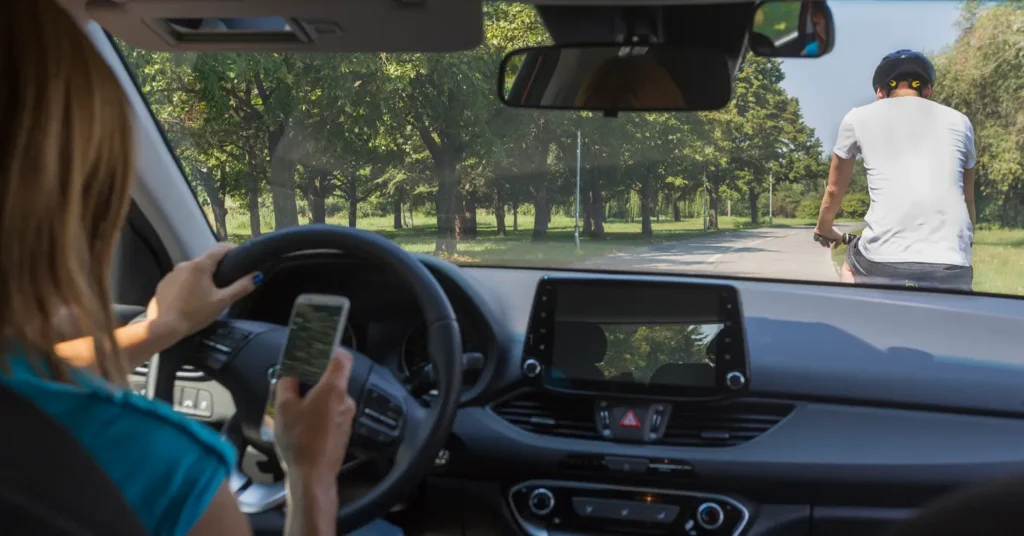
If you are injured in a distracted driving accident in Florida, you must meet the state’s serious injury threshold to pursue compensation for pain and suffering against the at-fault driver. Otherwise, your recovery is limited to what your own insurance pays under Florida’s no-fault Personal Injury Protection (PIP) law.
In simple terms: you need to prove serious injury to move beyond basic insurance coverage and seek full justice after a distracted driving crash.
Understanding Distracted Driving Accidents in Florida
Under Florida Statute § 316.305, texting and driving is a primary offense. Distracted driving is a leading cause of car accidents throughout Florida, including in Fort Myers and Naples. According to the Florida Department of Highway Safety and Motor Vehicles, a crash occurs every 44 seconds in Florida, and one in seven crashes involves distracted drivers.
Distracted driving refers to any activity that diverts attention from operating a vehicle—this includes texting, talking on the phone, eating, adjusting the radio, or even talking to passengers. According to the National Highway Traffic Safety Administration, distracted driving claimed 3,208 lives in the United States in 2024, and 315,167 more suffered life-altering injuries.
Florida law recognizes the dangers of distracted driving and has enacted statutes targeting these behaviors. However, when accidents occur, victims face a unique set of legal hurdles due to the state’s no-fault insurance rules and the serious injury threshold.
How Does Florida’s No-Fault Law Affect Distracted Driving Accident Claims?
Florida is a “no-fault” state for car insurance. This means that after most car accidents—including those caused by distracted driving—each injured party first turns to their own Personal Injury Protection (PIP) insurance for coverage. Under Florida Statute § 627.736, PIP pays up to $10,000 for medical bills and partial lost wages, regardless of who caused the crash. This prompt payment system is designed to help accident victims get immediate medical care and wage replacement without having to prove fault.
However, PIP coverage has strict limits. It pays only a portion of medical bills and lost wages and does not compensate for pain and suffering, mental anguish, or other non-economic damages. To obtain these broader damages from the distracted driver and their insurer, you must meet the serious injury threshold.
What Is the Serious Injury Threshold Under Florida Law?
The serious injury threshold in Florida Statute § 627.737 is a legal standard that determines when an accident victim can step outside of the no-fault system and file a lawsuit against the at-fault driver. To do so, your injuries must involve at least one of the following:
- Significant and permanent loss of an important bodily function
- Permanent injury within a reasonable degree of medical probability (other than scarring or disfigurement)
- Significant and permanent scarring or disfigurement
- Death
If your injuries from a distracted driving accident do not meet one of these criteria, you are typically limited to collecting PIP benefits, even if the other driver was clearly at fault.
Can You Sue a Distracted Driver for Pain and Suffering?
Yes—but only if your injuries meet the serious injury threshold described above. If you qualify, you can pursue a claim against the distracted driver for damages such as pain and suffering, emotional distress, loss of enjoyment of life, and other non-economic losses. You may also recover the full cost of medical expenses and lost wages not covered by PIP.
For example, if you sustain a permanent back injury in a distracted driving crash, and your doctor confirms the permanency of the injury, you can bring a lawsuit against the at-fault driver seeking damages beyond what PIP provides.
What Are Common Types of Serious Injuries in Distracted Driving Accidents?
Distracted driving accidents can cause a wide range of injuries, but those that often meet the serious injury threshold include:
- Traumatic brain injuries (TBI)
- Spinal cord injuries and paralysis
- Broken bones with permanent impairment
- Severe burns or disfigurement
- Loss of limb or function
- Internal organ damage
Even injuries that do not seem catastrophic at first may become permanent over time. It is critical to seek prompt medical attention and follow up with specialists to document the true extent of your injuries.
Why Choose Parrish & Goodman for Your Distracted Driving Accident Case?
At Parrish & Goodman, Attorneys at Law, we have extensive experience helping accident victims in Fort Myers and Naples navigate the complexities of Florida’s distracted driving and serious injury laws. Our attorneys understand how insurance companies operate and how to develop strong medical evidence to support claims that meet the serious injury threshold.
We pride ourselves on personalized attention and aggressive advocacy for our clients. Our firm has handled thousands of car accident and personal injury cases, recovering substantial settlements and verdicts for those harmed by distracted drivers. We are committed to guiding you every step of the way and fighting for the compensation you deserve.
Frequently Asked Questions
What counts as distracted driving in Florida?
Distracted driving includes any activity that takes your mind, eyes, or hands off driving. Texting while driving is specifically prohibited by law in Florida, but other distractions—like eating, grooming, or adjusting a GPS—can also result in liability.
What if the other driver was ticketed for distracted driving?
A ticket for distracted driving can help prove fault but does not automatically guarantee compensation for pain and suffering. You must still meet the serious injury threshold to pursue non-economic damages.
How do I prove my injuries meet the serious injury threshold?
Medical documentation is essential. Your physician must certify that your injuries are permanent or involve significant loss of function. Our team works closely with medical experts to build compelling cases.
What should I do after a distracted driving accident?
Seek immediate medical attention, report the crash to law enforcement, gather evidence (photos, witness names), and contact an experienced attorney. Do not rely solely on insurance adjusters to protect your interests.
Can I recover damages if I was partially at fault?
Florida follows a modified comparative fault rule. You may still recover damages if you are less than 50% at fault, but your compensation will be reduced by your percentage of fault.
Get the Legal Support You Need
If you or a loved one has been injured in a distracted driving accident in Fort Myers, Naples, or the surrounding areas, don’t navigate Florida’s complex insurance and serious injury laws alone. Schedule a free consultation with Parrish & Goodman to learn more about your rights, the serious injury threshold, and how we can help you pursue the compensation you deserve.
Your recovery starts with a call—reach out today and put our experience to work for you.